The Final Reduced Species in the Electron Transport Chain Is
The mammalian mitochondrial electron transport chain ETC includes complexes I-IV as well as the electron transporters ubiquinone and cytochrome c. It is a series of oxidation-reduction reactions that involve the transfer electrons from NADH and FADH2 to oxygen across several protein metal and lipid complexes in the mitochondria known.

Electron Transport Chain An Overview Sciencedirect Topics
A final electron acceptor that is a stronger oxidizing agent than the last oxidizing agent in the electron transport chain is needed to remove low-energy electrons from the chain so.
. Together with oxygen electrons and protons form molecules of water. The final level of O 2 depletion was below the O 2 electrode sensitivity. Glucose is oxidized and oxygen is reduced in this process.
ETCs are used in photosynthesis or as in the case of sugar. Reduced electron transport centers in Complexes I or III and the presence of O 2 to allow one electron reduction to O 2. There are two electron transport pathways in the ETC.
Electron carriers are reduced during glycolysis and the citric acid cycle to NADH H and FADH2. The final electron acceptor is oxygen. Sulfate reduction is a type of anaerobic respiration that utilizes sulfate as a terminal electron acceptor in the electron transport chain.
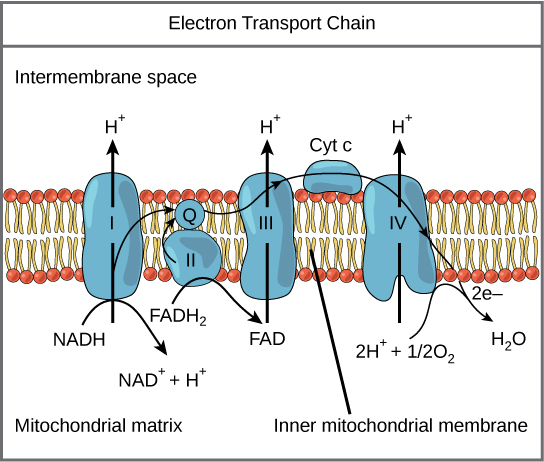
Figure 712 The electron transport chain is a series of electron transporters embedded in the inner mitochondrial membrane that shuttles electrons from NADH and FADH 2 to molecular oxygen. Which of the following respiratory inhibitors does not block the final step of electron transport the reduction of oxygen to form water. O 2 production by the respiratory chain.
All of these block the last reaction of electron transport. Electron transport chain is a main step in oxidative phosphorylation. Oxygen is the final electron acceptor.
The first four major complexes which are responsible for the redox portion of this process comprise the respiratory chain RC and are located within the mitochondrial inner membrane. Compared to aerobic respiration sulfate reduction is a relatively energetically poor process though it is a vital mechanism for bacteria and archaea living in oxygen-depleted sulfate-rich environments. In the process protons are pumped from the mitochondrial matrix to the intermembrane space and oxygen is reduced to form water.
Carbon Monoxide CO d. The final step of the electron transport chain is to remove the electrons with lower energy out of the system. In the process protons are pumped from the mitochondrial matrix to the intermembrane space and oxygen is reduced to form water.
The electron transport chain is a series of electron transporters embedded in the inner mitochondrial membrane that shuttles electrons from NADH and FADH 2 to molecular oxygen. The final reduced species in the electron transport chain is a. What is the final acceptor of electron in the electron transport chain.
Cytochrome Cis the complex which transfers the electrons to the final protein in the electron transport chain. The chain molecules include peptides enzymes which are complex proteins or proteins and others. Question 50 1 pts The final reduced species in the electron transport chain is H20 cytochromec coenzyme Q none of these.
Reactive oxygen species. Complex IV also known as cytochrome c oxidase oxidizes cytochrome c and transfers the electrons to oxygen the final electron carrier in aerobic cellular respiration. The cytochrome proteins a and a3 in addition to heme and copper groups in complex IV transfer the donated electrons to the bound dioxygen species converting it into molecules of water.
The electron transport chain - Mitochondrial bioenergetics. During aerobic respiration the final acceptor of electrons in the electron transport chain is molecular oxygen although there is a variety of acceptors other than oxygen such as sulfate in anaerobic respiration 38. Complex IIIIIV with NADH as the substrate and complex IIIIIIV with succinic acid as the substrate.
17The final reduced species in the electron transport chain is a O 2 b H 2 O c cytochrome d coenzyme Q c a O 2 The electron transport chain functions to pass all the electrons used in generation of the proton electrochemical gradient to oxygen which is. The final reduced species in the electron transport chain is cytochrome c coenzyme Q none of these H2O O2. Oxidative phosphorylation is a cellular process that harnesses the reduction of oxygen to generate high-energy phosphate bonds in the form of adenosine triphosphate ATP.
The final reduced species in the electron transport chain is A. This allows for new electrons to be added part of the reason the process is called a chain. These carriers then donate electrons and protons to the electron carrier proteins of the electron transport chain.
Cy View the full answer Transcribed image text. The electron flow is coupled with the generation of a.

The Mitochondrial Electron Transport Chain Etc Electrons Are Download Scientific Diagram
Electron Transport Chain Biology For Majors I

Respiratory Chain Complexes Or Electron Transport Chain Etc In Download Scientific Diagram
0 Response to "The Final Reduced Species in the Electron Transport Chain Is"
Post a Comment